



A 2025 study of 4,747 restaurants in Seoul, South Korea found that even though contamination was reported in only 7.2% of establishments, hair still outranked pests, metal, plastic, and plastic wrap as the most common substance identified. Even at a low overall incidence rate, hair consistently dominates the contamination profile when it occurs.
Hair entering food can compromise product hygiene and quality, while also creating unpleasant experiences for consumers. Its consistent ranking as a top contaminant across food service settings underscores how easily it can enter food handling environments.
While hair cannot be completely eliminated, it can be controlled at the source through effective containment. For food handlers, this means covering both the head and facial hair to help prevent loose strands from reaching food and food contact areas.
The Contamination Pathway:
Hair can come from more than one place.
Head Hair– Loose strands can escape into food preparation and product areas.
Facial Hair – Beards and moustaches can present another potential pathway for loose hair.
The right coverage for the job:
Mob Caps

Beard Covers
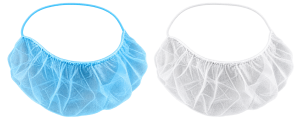
Designed to provide coverage for facial hair, helping contain beards and moustaches as part of everyday hygiene practices.
Together, they provide practical coverage that fits easily into everyday PPE and hygiene routines.
Codex’s General Principles of Food Hygiene recognises head and beard coverings as part of protective clothing where there is a likelihood of product contamination. At ASAP, we believe practical contamination control starts with simple, consistent measures.
That’s why our Containment Control PPE range includes both Mob Caps and Beard Covers — providing practical additions to routine PPE requirements across food, healthcare, catering, and other hygiene-sensitive environments.
Sources:
Scientific Reports (2025) — Identification of factors associated with foreign substance contamination in restaurant food.
Codex Alimentarius (2023) — General Principles of Food Hygiene (CXC 1-1969).