

What Makes a Glove High Grip?
Understanding Texture, Control and Surface Performance
When discussing high grip gloves, texture is often the first feature people notice.
Raised surfaces, patterns and grip finishes are commonly associated with better performance. However, grip is influenced by more than appearance alone. The way a glove performs depends on how it interacts with the object being handled, especially when oils, grease, water or chemical residues are introduced.
In dry environments, many gloves may still perform adequately. The challenge begins when surfaces become slippery and maintaining control becomes more difficult.
This is where high grip gloves begin to matter.
Why Does Grip Matter?
Grip affects more than handling alone.
A glove with poor grip often causes users to apply additional force during handling. Instead of the glove supporting the task, the wearer ends up working harder to maintain control.
Over time, this may contribute to hand fatigue, reduced handling precision and greater strain during repetitive movements, particularly in environments involving lifting, gripping, twisting or equipment handling.
Understanding grip therefore matters not only from a safety perspective, but also from an ergonomic and performance standpoint.
And that understanding begins with surface design.
Texture Is Where High Grip Begins
Texture influences how a glove interacts with the handling surface.
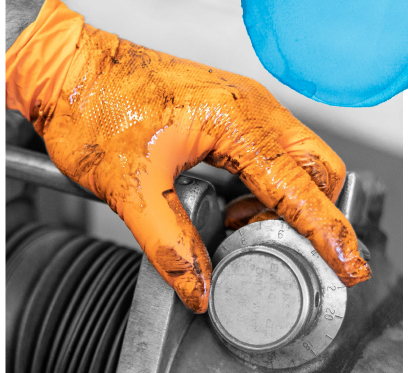
In dry conditions, smooth gloves may still provide acceptable performance. However, once oils, water or grease are introduced, a slippery layer forms between the glove and the object, reducing friction and increasing the likelihood of slipping.
Textured surfaces help overcome this by creating additional contact points while assisting fluid movement away from grip areas. This reduces liquid build up and supports more stable handling performance in wet or oily environments.
Does Texture Shape Matter?
Yes, but it depends as there is no universal “best” texture. The right choice depends on the environment and required dexterity.
Smaller textures are often associated with greater tactile sensitivity, while larger raised textures are commonly used in heavy duty environments exposed to oils, grease and repetitive handling.
Larger textures create more pronounced contact areas and may improve fluid displacement by allowing liquids to move away from grip zones.
Diamond textures are one example commonly used in industrial gloves because they balance grip performance, flexibility and handling stability in wet conditions.
High Grip Is Really About Surface Performance
Grip strength does not come only from friction at the contact point.
When fluids accumulate between the glove and the object, surface contact becomes less stable. High grip gloves therefore often use raised textures that encourage fluid movement away from handling zones and improve grip consistency.
One example is the diamond texture used across ASAP T Grip gloves, where the raised surface assists in moving oils and liquids away from key handling areas to support grip performance during demanding tasks.
When Choosing the Right Grip Glove
Consider:
- Will the gloves be exposed to oils or grease?
• Is tactile sensitivity important?
• Will they be used for prolonged wear?
• Is additional durability required?
• Does the task prioritise precision or protection?
Because high grip is not simply about making gloves rougher.
It is about maintaining control when conditions become more demanding.
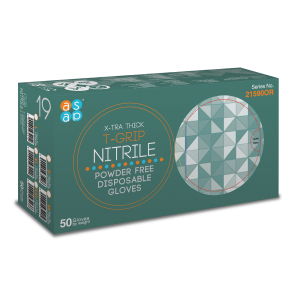
Explore ASAP T-Grip Disposable Gloves